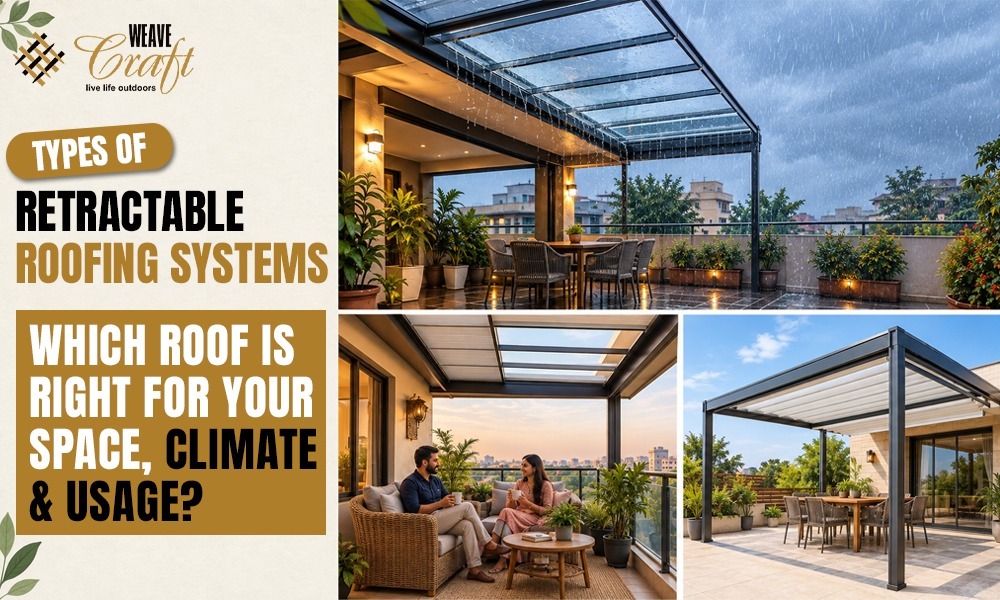
Retractable Roofing Systems

Retractable roofing systems are movable roof structures designed to provide shade, weather protection and controlled access to an open space. They can retract, slide, tilt or adjust depending on their design – allowing the roof to respond to changing weather & usage. 

Since different outdoor spaces have different requirements for sunlight, ventilation, rain protection and natural light, retractable roofing systems are available in several forms, including fabric roofs, aluminium louvres, glass roofs & retractable skylights.

A terrace in Delhi may need stronger protection from intense summer heat – while a poolside deck in Goa may require better rain and humidity management. A restaurant in Bengaluru may need natural light and ventilation along with reliable weather cover. Choosing the right system therefore depends on the space, local climate & how the area will be used.

The following sections compare these retractable roofing systems and explain what to consider before choosing one:-

How retractable roofing systems differ by material, design & use

Retractable roofing systems differ mainly in how they move, what they are made of and how they are designed to respond to the needs of a space. Some use flexible fabric – while others use adjustable aluminium louvres, moving glass panels or retractable roof sections. The main comparison factors include:-

  • Material – fabric, aluminium and glass offer different levels of shade, daylight, ventilation and weather protection

  • Movement – some systems fully retract – while louvred roofs adjust their blade angle to control sunlight and airflow

  • Climate and usage – sun exposure, rainfall, wind and the frequency of use can influence which system is suitable

  • Cost – the roof structure, material, size, automation and installation requirements can affect the overall investment

  • Maintenance – fabric, glass, drainage channels, seals, tracks and moving components may have different cleaning and servicing needs

  • Installation – available space, fixing points, structural conditions, drainage and access for installation can affect the choice

Looking at these factors together provides a more practical basis for comparing retractable roofing systems before moving on to the specific types and their applications

The main types of retractable roofing systems

  • Retractable fabric roofs: flexible coverage for terraces & outdoor seating

Fabric systems are useful when flexibility is a major priority. The roof can remain open when the weather is comfortable & extend when direct sunlight or rain makes the area difficult to use. That makes fabric a strong option for terraces, patios, garden seating and outdoor dining areas where people want access to the open sky without giving up weather cover.

EVO is designed for larger outdoor areas, with coverage of up to 44 m², a maximum single-frame width of 5.5 metres and a projection of 8 metres. The fabric can be partially or completely opened – while water is directed towards side gutters and pole drainage. The system can be attached to a building, integrated into an existing setting or installed as a freestanding unit. Multiple modules can also be linked when a larger area needs coverage.

Fabric specification also affects how the space feels and performs. High-tensile, waterproof fabric can provide protection against rain while remaining suitable for a retractable design. A translucent finish can allow daylight to enter while the roof is closed – making it useful where users want cover without losing natural light. An opaque finish can provide stronger shade in areas that receive intense direct sunlight

  • Bioclimatic aluminium louvres: adjusting sunlight and airflow

Louvred roofs take a different approach by using adjustable aluminium blades instead of a flexible covering. Changing the blade angle alters the amount of direct sunlight entering the space & can also influence airflow, giving users more control as the sun moves during the day.

The T-Roof system uses 18 cm-wide louvres with 18 × 24 cm rafters and can cover up to 36 m². A maximum single-frame width of 4.5 metres and projection of 8 metres provide scope for larger terraces and outdoor seating areas. The louvres can rotate between 0° & 90° – allowing the amount of direct sunlight entering the space to be adjusted as the sun moves.

Remote and smartphone operation adds another layer of convenience because the roof can be adjusted without manually handling each component. Integrated drainage helps manage rainwater – while optional insulation foam can add another layer of thermal control. Wall-mounted, integrated and freestanding configurations also allow the system to suit different site layouts.

X-Roof offers another louvred configuration, with coverage of up to 36 m² for a single module & up to 56 m² for a double module. Motorised operation, integrated drainage and optional insulation make it suitable for spaces where regular adjustment and weather management are important.

Wind conditions still need separate attention. An exposed high-rise terrace does not experience the same forces as a sheltered courtyard – so building height, surrounding buildings, orientation, exposure & anchoring all need to be considered

  • Retractable glass roofs: when daylight is a major priority

    Glass retractable roofs are generally considered where daylight and visual openness are priorities, particularly in courtyards, extensions and semi-outdoor spaces – where a solid roof could make the area feel darker. Solar heat, however, needs equal attention because a large glazed roof can receive significant sunlight depending on its orientation, glazing specification & surrounding shade.

A glass roof should therefore be assessed on more than its appearance. Key points include:-

  • glazing type and solar-control properties
  • amount of direct sunlight reaching the roof
  • panel weight and movement mechanism
  • seals and joints
  • drainage around the panels
  • cleaning access
  • safety glazing requirements
  • maintenance of tracks and moving components

These details can affect indoor comfort, cleaning requirements & long-term use

  • Retractable skylights: controlled daylight for roof openings

    Some retractable roofing systems are designed around existing architectural roof openings where controlled access to daylight and the sky is the main requirement. Retractable skylights can open part of a roof when outdoor conditions are comfortable & provide weather protection when closed.

    ClearSky offers retractable skylight and dome configurations with two to eight segmented profiles, depending on the opening. SolaGlide is designed for inclined retractable skylight applications – while Sunroof provides a horizontal configuration. The choice can depend on the roof design, opening dimensions and the required direction of movement

  • Pool enclosures: weather protection around swimming pools

    Pool enclosures address a different requirement because the system needs to work around the pool, surrounding circulation and access points. AquaSun is designed for residential and commercial swimming pools – using aluminium & polycarbonate elements with rail-based movement.

    Pool dimensions, surrounding walking space, access points, drainage, cleaning and ventilation should be assessed before installation. These factors help ensure the enclosure provides suitable coverage without restricting movement around the pool

Which retractable roofing system is suitable for different Indian climates

The right retractable roof depends on the local climate – the space being covered and how the area will be used. The following considerations can help narrow down the retractable roofing systems worth evaluating for each location:-

Delhi NCR

Delhi NCR experiences strong summer heat and intense sunlight, making shade an important consideration for terraces, balconies, gardens, rooftop cafes and outdoor seating:-

  • Aluminium louvres can be considered where users want to adjust the amount of direct sunlight entering the space
  • Fabric roofs can be considered for areas where shade and the option to fully or partially open the roof are important
  • Outdoor spaces used mainly in the evening may require a different balance of shade and open-sky access than areas used during the afternoon

Mumbai

Mumbai’s combination of heavy seasonal rainfall and humid conditions makes drainage, weather protection and maintenance important for terraces, restaurants, balconies and outdoor hospitality areas:-

  • Consider systems with properly planned rainwater drainage and discharge
  • Check how exposed components, joints and moving parts will be maintained
  • Fabric, louvred or glass systems can be evaluated based on the required level of coverage, daylight and ventilation

Bengaluru

Bengaluru’s outdoor spaces may need to accommodate both sunny periods and seasonal rainfall. Restaurants, cafes, residential terraces and landscaped areas can therefore benefit from a roof that can be adjusted according to how the space is being used:-

  • Aluminium louvres can provide adjustable control over sunlight and airflow
  • Fabric systems can be considered where flexible shade and open-sky access are priorities
  • Glass roofs may suit spaces where retaining natural daylight is an important consideration

Goa

Goa’s coastal setting makes rainfall and humidity relevant considerations for resorts, poolside areas, restaurants, patios and other outdoor spaces:-

  • Pay particular attention to drainage, exposed components and maintenance access
  • Fabric or louvred roofs can be considered where adjustable weather protection is required
  • Poolside projects may need a dedicated pool enclosure rather than a conventional terrace roof, depending on the layout and intended use

Hyderabad

Hyderabad’s hot conditions make shade an important consideration for terraces, patios, gardens, restaurants and other spaces used during the day:-

  • Aluminium louvres can be considered where adjustable sunlight control is useful
  • Fabric roofs can provide flexible coverage while allowing the area to reopen when conditions are comfortable
  • The orientation of the space and the time of day when it is used should also be considered before selecting the roof

Chennai

Chennai’s warm and humid conditions make shade, ventilation, drainage and material maintenance relevant when planning roofs for terraces, restaurants, balconies and coastal-facing spaces:-

  • Consider how much shade and airflow the space needs during regular use
  • Check drainage arrangements carefully for areas that receive seasonal rainfall
  • Material, exposed components and maintenance requirements should be reviewed alongside the desired appearance and level of coverage

Match the system to the space – not only the city

Location provides a useful starting point but it should not be the only basis for choosing a roof. A residential balcony, restaurant terrace, resort deck and swimming pool can have very different requirements even within the same city:-

Location

Spaces to consider

Key considerations

Systems to evaluate

Delhi NCR

Rooftops, terraces, gardens, cafés

Strong sunlight, shade, daytime use

Fabric roofs, aluminium louvres

Mumbai

Terraces, restaurants, balconies

Rain, humidity, drainage

Fabric roofs, aluminium louvres, glass roofs

Bengaluru

Restaurants, patios, residential terraces

Flexible shade, daylight, changing weather

Fabric roofs, aluminium louvres, glass roofs

Goa

Resorts, poolside areas, restaurants

Rain, humidity, outdoor exposure

Fabric roofs, aluminium louvres, pool enclosures

Hyderabad

Terraces, patios, gardens, restaurants

Strong sunlight, shade, outdoor comfort

Fabric roofs, aluminium louvres

Chennai

Terraces, restaurants, balconies, coastal spaces

Heat, humidity, rainfall, ventilation

Fabric roofs, aluminium louvres, glass roofs

The final selection should also account for – available dimensions, installation conditions, drainage, frequency of use, maintenance & the level of automation required. A site-specific assessment can help determine which retractable roofing systems are appropriate for the particular space 

What should you check before choosing a retractable roof

A product comparison becomes much more useful once the basic site requirements are known. Before requesting a quotation, check the points that can affect the system, installation and future maintenance:-

Start with the space

  • Measure the available width, projection and height
  • Check existing fixing points and the condition of the terrace or roof
  • Confirm whether the installation will be attached, integrated or freestanding
  • Check whether installation access is available for large components

Then assess the roof requirements

  • Ask about maximum recommended dimensions for the selected system
  • Understand the material and glazing specifications
  • Check how rainwater is collected and discharged
  • Confirm the motor, controls and electrical requirements
  • Ask about anchoring and wind-load assessment
  • Check what happens to the system during a power failure
  • Understand how moving components are accessed for servicing

Finally, consider maintenance

  • Keep gutters & drainage paths clear
  • Check fabric, seals, joints and moving components regularly
  • Keep glass and skylight surfaces accessible for cleaning
  • Follow the manufacturer’s instructions for motorised operation and servicing
  • Ask about recommended inspection and service intervals before installation

Drainage deserves particular attention because it directly affects how the space behaves during heavy rain. A roof can have a suitable covering & still create problems if water collects at the edges, near fixing points or around poorly planned discharge areas

Retractable roofing vs fixed roofing: Which one should you choose?

The choice between a retractable and fixed roof depends on how much flexibility the space requires:-

Factor

Retractable roofing

Fixed roofing

Opening

Can be opened or adjusted as required

Remains permanently covered

Sunlight

Allows control over direct sunlight

Limits direct sunlight consistently

Ventilation

Can provide greater access to open air when retracted

Depends on the roof design and surrounding openings

Weather response

Can be adjusted according to changing conditions

Provides consistent coverage

Best suited for

Spaces used in changing weather or for multiple purposes

Spaces requiring permanent overhead protection

For terraces, restaurants, resorts, poolside areas and other outdoor spaces where flexibility matters – a retractable system can offer greater control over how the area is used. A fixed roof may be more appropriate when permanent coverage is the primary requirement.

Choose a retractable roofing system built around your space

The right retractable roof should suit your space, climate, usage and long-term requirements. With more than 25 years of experience, Weave Craft offers roofing solutions for terraces, patios, gardens, restaurants, resorts, poolside areas and other outdoor spaces across different locations. 

Our range covers fabric retractable roofing systems, bioclimatic louvres, glass retractable roofs, skylights and pool enclosures, allowing you to consider different solutions based on how your space needs to perform. We can help you assess the right configuration, size, drainage and installation approach for your site. 

If you are planning a new outdoor roof or upgrading an existing space – talk to our team to explore a suitable retractable roofing solution for your requirements.
retractable pergola roof

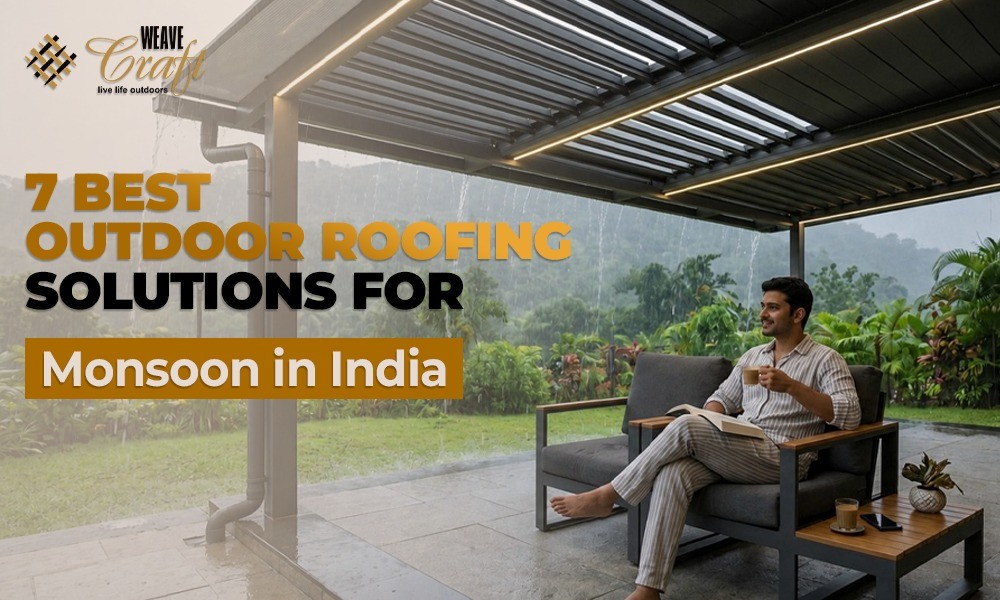
Using an outdoor space during the monsoon in India can be challenging when rain, wind, humidity and sudden weather changes make balconies, terraces and outdoor seating difficult to use. The right outdoor roofing solution can help protect the space while maintaining ventilation, daylight and the option to stay open when the weather improves.

This guide explores 7 outdoor roofing solutions for monsoon conditions in India – covering balconies, terraces, pools, cafes, restaurants, rooftops and hospitality spaces. Each solution is matched to the type of space, level of weather exposure and flexibility required:-

How to make outdoor spaces monsoon-ready

A roof is only one part of the answer.

● How to protect outdoor spaces from wind-driven rain

Rain can fall vertically but monsoon rain often arrives at an angle. Wind direction, building height, surrounding structures & the orientation of an opening all influence how much water reaches a balcony, terrace or facade. Wind speed and direction can significantly affect moisture reaching exposed building surfaces. That explains a familiar situation – you sit under a perfectly good canopy during a shower and still find the chair, floor and cushions getting wet. For exposed balconies, cafes and terraces, vertical solutions can therefore become useful companions to a roof. At Weave Craft, our Panora-Kinetic system, for example, functions as a glass railing and can also act as a wind and rain shield when required. It is a side-protection system, not a retractable pergola roof and should be understood that way

● Plan proper drainage for monsoon rainwater

Once rain lands on a roof, the next question is – where does the water go? Gutters, channels, outlets, downpipes and the existing terrace drainage route all matter. An outdoor area can have excellent overhead protection and still develop puddles if water cannot leave efficiently. This becomes especially important during intense rainfall. India experiences high-frequency heavy rainfall events during the monsoon with particularly high frequencies over the northeast and West Coast. So before installation, check the complete water path rather than looking only at the roof surface

● Choose retractable roofing for flexible outdoor use 

This is where adaptable roofing becomes useful. Keeping a roof permanently closed may protect furniture and flooring but it can also reduce daylight, airflow & the feeling of being outdoors. A retractable roofing system gives the user the choice to close the space when rain arrives and open it when the sky clears. That flexibility is valuable in India because a monsoon day can move from bright sunshine to a sudden shower & back again

● Choose roofing based on climate and usage

Mumbai’s monsoon exposure, Delhi’s seasonal extremes, Bengaluru’s milder but frequent showers & coastal humidity are different design conditions. The intended use matters just as much. A family may tolerate moving two cushions indoors. A restaurant serving 80 outdoor covers cannot operate with the same arrangement

7 outdoor roofing solutions for different spaces during monsoon

1. Retractable roofing systems for apartment balconies 

An apartment balcony has very little room for error. Rain can enter from above, while wind can push water through the open sides. At the same time, completely enclosing the balcony can reduce daylight, airflow and the sense of openness that makes the space useful.

For compact balconies, a retractable fabric roofing system such as EVO can be considered when flexible overhead protection is required. The system is listed with coverage of up to 44 m² and allows the fabric to retract when full coverage is not needed.

However, overhead protection is only one part of the solution. If the balcony receives wind-driven rain from one or more exposed sides, vertical screens or glazing may also be required. Drainage needs equal attention: the existing outlet should remain accessible and the roof’s water discharge should have a clear path away from the balcony.

Best suited for – apartments with compact balconies that need flexible overhead protection without permanent enclosure
 Key consideration – assess the direction of prevailing rain and wind before deciding whether roofing alone will be sufficient

2. Retractable pergolas for home terraces 

A retractable pergola can be a practical roofing solution for residential terraces where homeowners want protection from rain without permanently covering the entire outdoor space. A fixed roof can protect the entire terrace but it also removes the flexibility to use the open sky when conditions are favourable.

A retractable pergola is useful in this situation because the roof can provide overhead protection during rain and open when full coverage is unnecessary.

The profile also matters. Flat pergolas generally suit homes with clean, contemporary architecture. Spline pergolas introduce a more curved profile that can work well with landscaped terraces, while Vault designs are more appropriate for larger outdoor areas where a stronger architectural form is required.

The right choice should therefore follow the terrace’s dimensions, furniture arrangement, structural support and intended use.

Best suited for – independent homes, villas and larger residential terraces

Key consideration – decide which portion actually needs coverage instead of automatically roofing the entire terrace

3. Retractable pool enclosures for home poolsides

Pool areas become difficult to use when rain arrives unexpectedly. The problem extends beyond the water itself. Wet deck surfaces, slippery circulation paths, exposed furniture and reduced visibility can affect how safely and comfortably the entire area can be used.

A dedicated retractable pool enclosure, such as AquaSun-type systems, is designed specifically for this setting. Unlike a general pergola, a pool enclosure can address the larger relationship between the pool, deck and surrounding area.

Planning should begin with the pool dimensions, deck circulation, drainage, landscaping and required clearance. The enclosure also needs to work with access around the pool rather than obstructing maintenance or movement.

Best suited for – residential pools, villas, resorts and other properties with dedicated pool areas
Key consideration – evaluate the complete pool deck, not only the roof above the water

  1. Glass retractable roofs for cafe outdoor seating

For cafes, outdoor seating is part of the operating layout. Once rain starts, the problem is not simply keeping customers dry. Staff still need to move between tables, furniture may need to be rearranged and water must leave the covered area without creating puddles.

A glass retractable roof can provide flexibility during changing weather, particularly when the operator wants to retain an open-air seating area during clearer periods. However, the roof should be planned alongside table spacing, service routes, lighting, fans, drainage and side exposure.

Wind-driven rain is often overlooked. A roof may keep direct rainfall away while water continues entering horizontally from an exposed side. In such cases, vertical windbreaks or retractable glazing can complement the overhead system.

Best suited for – cafes with dedicated outdoor seating
Key consideration – plan customer movement and staff circulation before fixing the roof footprint

5. Bioclimatic roofs for restaurant terraces

Restaurant terraces require more controlled weather protection because diners may remain seated for extended periods. The roof therefore needs to address rain while maintaining reasonable airflow and daylight.

A louvred bioclimatic roof can be useful where the operator wants to adjust the roof rather than simply open or close it. T-Roof, for example, uses adjustable aluminium louvers with an adjustment range of 0°-90°, while different bioclimatic configurations offer different coverage and operating characteristics.

This creates an important distinction. A fabric retractable roof is useful when the priority is opening the roof substantially during favourable weather. Adjustable louvres can be more appropriate when the space requires ongoing control over shade, daylight & airflow throughout the day.

The decision should therefore follow the restaurant’s operating pattern, roof span, table layout and exposure rather than the appearance of the roof alone.

Best suited for – restaurants with terrace or courtyard dining
Key consideration – decide whether you need full opening or continuous adjustment of the overhead environment

6. Retractable louvred roofs for rooftop restaurants

A rooftop restaurant has greater exposure than a ground-level terrace. There are fewer surrounding structures to block wind and rain can arrive from changing directions. The roof also has to work around kitchen access, service areas, furniture layouts and customer circulation.

X-Roof is one system worth evaluating where both tilting and retractable louvers are required. The actual decision depends on the required span, structural support, wind exposure, drainage and how the seating is distributed beneath the roof. A smaller system positioned correctly may perform better for a particular layout than a larger system that creates awkward unsupported areas.

Best suited for – rooftop restaurants, hospitality terraces and large commercial rooftops
Key consideration – assess wind exposure and structural conditions before selecting the roof based on coverage

7. Flexible outdoor roofing for hotel and resort lounges

A hotel or resort outdoor lounge has a different requirement from a private residence. The space needs to remain visually open, comfortable and usable while staff must be able to respond to changing weather without disrupting the entire area.

Depending on the architecture, several approaches can work – a retractable pergola for defined seating zones, a freestanding structure for larger open areas, a bioclimatic roof where adjustable airflow is important or a retractable skylight where the architecture centres around a large opening.

The decision should consider guest circulation, views, daylight, ventilation, furniture placement and operational access. Side exposure is particularly important for resort properties because landscaped and open sites can receive wind-driven rain from several directions.

The roof should also look appropriate when fully open and fully closed. Both positions are part of the guest-facing architecture.

Best suited for – hotels, resorts and hospitality properties with outdoor guest areas
Key consideration – treat weather adaptability as part of the overall space design, not as an equipment addition

How to choose the right outdoor roofing system

Before discussing brands or models, ask six practical questions:-

  1. Where does the rain enter? From above, from the sides or both?
  2. How is the space used? Dining, lounging, swimming, customer seating or circulation?
  3. What should happen after the shower? Do you want full openness, partial shade or continued protection?
  4. What does the building allow? Existing wall support, independent structure, unusual geometry or a large opening?
  5. How important are daylight and ventilation?
  6. What does the site demand? Drainage, wind exposure, humidity, maintenance and access?

The single rule is to choose the function first, then the technology.

A compact balcony may need a fabric retractable system. A restaurant requiring adjustable airflow may lean towards aluminium louvers. An independent farmhouse entertainment area may require a freestanding structure. A large glazed courtyard may need a retractable skylight. These are different problems

Find the best outdoor roofing solution with Weave Craft

A monsoon-ready outdoor space starts with the right solution, not simply the biggest roof. The right choice depends on the – space, its exposure, how it is used and how much flexibility you want throughout the year. That is where our experience can make a practical difference.

At Weave Craft, we have worked with different outdoor requirements and developed solutions across retractable pergolas, bioclimatic systems, retractable roofing systems, skylights and vertical closures. With 25+ years of experience, we bring together design understanding, product expertise & site-specific thinking to help homeowners, architects and businesses make better roofing decisions.

Whether you are planning a balcony, terrace, restaurant, hotel or commercial outdoor area – we help you explore the options that actually suit your space rather than a one-size-fits-all approach. This experience is what makes us a preferred choice for comprehensive outdoor roofing solutions in India.

Have an outdoor space you want to use through the monsoon? Talk to us today and find the Weave Craft solution that fits your space, architecture and everyday needs.

Creative Ways to Use Retractable Roofs for Restaurants & Cafes

In the past few years, dining in open-air spaces has been drawing people’s attention a lot. Customers today don’t just come for food; they come for the vibe. The photos, the lighting & the way the space feels, everything matters.

That’s why restaurant owners are investing more time in design elements that shape experiences and not just aesthetics. Among them, retractable roof systems have become a game-changer. They turn regular outdoor spaces into flexible, weather-proof dining zones that are comfortable during harsh summers, safe during monsoons & inviting all year round. A well-designed retractable roof doesn’t just provide protection but also gives a definition to a place. It decides the mood, the light & impression of your brand on customers the moment they walk in.

Why Retractable Roofs Are Becoming Essential

A retractable roof gives restaurants/cafes the flexibility to operate comfortably through heat, rain, or cold. These roofs can open up completely on pleasant evenings & close during harsh weather creating a smooth indoor-outdoor flow. There are different types available (fabric, louvered, or Retractable sliding roof) that suit varied spaces and themes.

In cities like Delhi, Jaipur & Bangalore, cafe owners prefer sleek, automated roofs that complement modern architecture. Whereas, in coastal regions like Goa & Kochi lightweight waterproof fabric roofs are more practical due to humidity and salt exposure. The beauty of retractable roofs lies in their adaptability. You can plan your cafe layout and theme around them to create something magical.

Creative Outdoor Styles That Work Best

Every restaurant has its own style. Some aim for luxury, while others want to feel natural and relaxed. Here are a few styles that are trending and work beautifully with retractable roofing:-

  • Urban Rooftop Lounges:
    Perfect for metropolitan cities. Combine a motorized retractable glass roof with warm lighting, wooden flooring & soft seating. It allows a full view of the skyline while giving control over sunlight during the day.
  • Nature-Inspired Courtyard Cafes:
    For small-town or eco-themed cafes, a light fabric roof with natural textures blends well with plants and earthy decor. Pair it with rattan or wicker furniture for an organic vibe that feels grounded and calm.
  • Cultural or Heritage Cafes:
    In places like Udaipur & Lucknow, people still love a traditional touch. Here, aluminum pergola-style roofs with adjustable louvers look beautiful with lantern lighting and wooden furniture. It keeps the local cultural charm alive while maintaining functionality.
  • Compact Balcony Cafes:
    Small spaces can still be creative. Foldable or retractable sliding roofs can turn narrow balconies into inviting breakfast corners or evening tea spots. Many new cafes are doing this smartly.

Design, Decor & Functionality Go Hand in Hand

  • The best outdoor setups are those where every element including roof, furniture & lighting feels like a part of one story. If you’re investing in retractable roof systems, make sure your furniture complements it.
  • Wooden tables look great under beige or neutral roofs. Metal furniture pairs well with sleek louvered or black-framed structures. For tropical or casual setups, use cane or rattan furniture with fabric roofs. The goal is to make sure your space looks intentional, not assembled in pieces.
  • Durability is another key factor. Go for weather-resistant materials that can handle sun, wind, and rain. A good retractable roof system lasts for years with minimal maintenance especially if you clean the fabric and check the motor & sliding panels regularly.

Turning Ideas into Spaces People Remember

A thoughtfully designed outdoor space can become your biggest attraction. Whether it is a cozy cafe corner, a lakeside dining area or a modular terrace lounge, retractable roofs help you shape an atmosphere that fits your brand and your guests’ comfort.

At Weave Craft, we take pride in helping businesses bring these spaces to life. Our retractable roofs, pergolas, umbrellas & outdoor furniture are designed to meet the demands of Indian weather while keeping your space visually stunning and functional. With years of expertise and a commitment to quality, we’ve become one of the most trusted names in outdoor design solutions. Trust us & see your vision turning into a dreamy reality.

FAQs

  1. Are retractable roofs good for Indian weather?
    Yes. Our retractable roofs are built to survive sunlight, rain, and moderate wind depending on the material and installation type
  2. How often do retractable roofs need maintenance?
    A quick cleaning and inspection every 3-6 months keeps them in good working condition
  3. Can retractable roofs be customized to match cafe themes?
    Absolutely. You can choose materials, colors, and lighting integrations to align perfectly with your restaurant or cafe’s overall design
retractable balcony roof

When you are setting up an outdoor space, the roof becomes the deciding factor in how often and how comfortably you’ll actually use it. People often feel confused between a fixed roof and a retractable one. Each has its own benefits. The right choice depends on your lifestyle, weather, and how flexible you want your space to be.

What is a Fixed Roof?

A fixed roof is permanent and built using materials like metal, polycarbonate, or timber. It offers full-time shelter, making it dependable if you want constant coverage against sun or rain. The big plus is its durability and minimal technical upkeep. Once it’s installed, you don’t have to think about moving parts or motors. The drawback is its rigidity. You can’t adjust sunlight levels or open it up on a pleasant day.

What is a Retractable Roof?

A retractable roof is designed to open or close as per your needs. Modern systems include sliding glass covers, or louvered panels that tilt for ventilation & shade control. This flexibility is the main reason many homeowners lean towards it. You can enjoy the open sky when the weather is good & cover the area when it’s too hot or rainy.

A retractable roof for the terrace makes the area more comfortable and easy to use all year. Similarly, a retractable balcony roof can make a small space more useful, turning it into a cozy sitting spot.

Side-by-Side Comparison

  • Flexibility – Fixed roofs stay as they are, while retractable ones adapt to your mood and the season
  • Aesthetics – Fixed roofs look permanent and Whereas retractable systems give a sleek, modern touch & can blend with different furniture styles
  • Maintenance – Fixed needs only Retractable requires track lubrication, fabric checks, and occasional servicing, though most are designed for long-term use
  • Climate Performance – In regions with strong sun and sudden rains, retractable designs let you adjust quickly without losing comfort
  • Investment Value – Fixed roofs cost less initially but retractable ones often add more long-term value because they enhance living space & property appeal

How to Choose the Right One

  • If you want minimal care and year-round shelter, go fixed
  • If you host gatherings, love natural light, or enjoy seasonal flexibility, retractable works better
  • If design matters, retractable systems pair beautifully with outdoor furniture sets for a complete look

Why We Recommend Retractable Roofs with Weavecraft

Both fixed and retractable roofs serve different purposes, but if you’re looking for flexibility, comfort, and long-term value, retractable systems clearly stand out. At Weave Craft, we design and deliver high-quality retractable pergolas, louvered roofs & sliding glass solutions that elevate your outdoor living. What makes us different is our commitment to using only the best materials and craftsmanship, paired with outdoor furniture collections that complete the look.

With our expertise, you don’t just get a roof, you get a well-planned outdoor space that feels inviting, durable & timeless.

FAQs

1. Are retractable roofs durable enough for heavy weather?
Yes, most modern systems are built with strong frames, proper drainage, and wind resistance to handle year-round weather

2. How often do retractable roofs need servicing?
Basic cleaning every few months and one professional check-up yearly is usually enough to keep them smooth & safe

3. Can a retractable roof be combined with outdoor furniture?
Absolutely. Many homeowners prefer coordinating roofs with furniture to create a seamless & stylish outdoor setup