
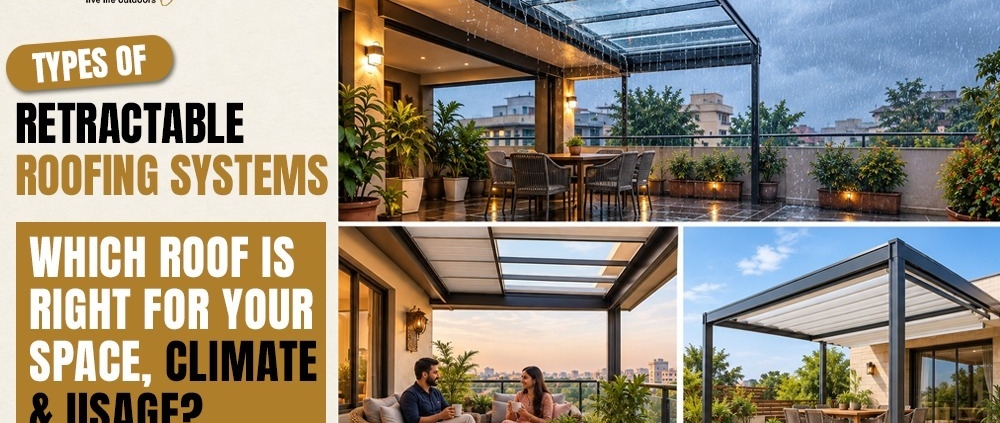
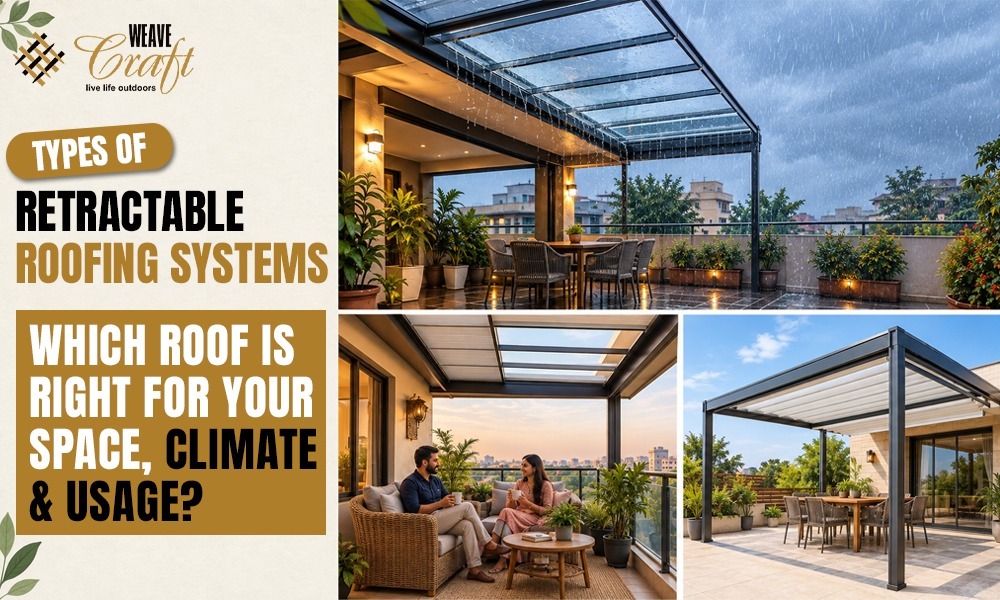
Retractable roofing systems are movable roof structures designed to provide shade, weather protection and controlled access to an open space. They can retract, slide, tilt or adjust depending on their design – allowing the roof to respond to changing weather & usage.
Since different outdoor spaces have different requirements for sunlight, ventilation, rain protection and natural light, retractable roofing systems are available in several forms, including fabric roofs, aluminium louvres, glass roofs & retractable skylights.
A terrace in Delhi may need stronger protection from intense summer heat – while a poolside deck in Goa may require better rain and humidity management. A restaurant in Bengaluru may need natural light and ventilation along with reliable weather cover. Choosing the right system therefore depends on the space, local climate & how the area will be used.
The following sections compare these retractable roofing systems and explain what to consider before choosing one:-
How retractable roofing systems differ by material, design & use
Retractable roofing systems differ mainly in how they move, what they are made of and how they are designed to respond to the needs of a space. Some use flexible fabric – while others use adjustable aluminium louvres, moving glass panels or retractable roof sections. The main comparison factors include:-
- Material – fabric, aluminium and glass offer different levels of shade, daylight, ventilation and weather protection
- Movement – some systems fully retract – while louvred roofs adjust their blade angle to control sunlight and airflow
- Climate and usage – sun exposure, rainfall, wind and the frequency of use can influence which system is suitable
- Cost – the roof structure, material, size, automation and installation requirements can affect the overall investment
- Maintenance – fabric, glass, drainage channels, seals, tracks and moving components may have different cleaning and servicing needs
- Installation – available space, fixing points, structural conditions, drainage and access for installation can affect the choice
Looking at these factors together provides a more practical basis for comparing retractable roofing systems before moving on to the specific types and their applications
The main types of retractable roofing systems
1. Retractable fabric roofs: flexible coverage for terraces & outdoor seating
Fabric systems are useful when flexibility is a major priority. The roof can remain open when the weather is comfortable & extend when direct sunlight or rain makes the area difficult to use. That makes fabric a strong option for terraces, patios, garden seating and outdoor dining areas where people want access to the open sky without giving up weather cover.
EVO is designed for larger outdoor areas, with coverage of up to 44 m², a maximum single-frame width of 5.5 metres and a projection of 8 metres. The fabric can be partially or completely opened – while water is directed towards side gutters and pole drainage. The system can be attached to a building, integrated into an existing setting or installed as a freestanding unit. Multiple modules can also be linked when a larger area needs coverage.
Fabric specification also affects how the space feels and performs. High-tensile, waterproof fabric can provide protection against rain while remaining suitable for a retractable design. A translucent finish can allow daylight to enter while the roof is closed – making it useful where users want cover without losing natural light. An opaque finish can provide stronger shade in areas that receive intense direct sunlight
2. Bioclimatic aluminium louvres: adjusting sunlight and airflow
Louvred roofs take a different approach by using adjustable aluminium blades instead of a flexible covering. Changing the blade angle alters the amount of direct sunlight entering the space & can also influence airflow, giving users more control as the sun moves during the day.
The T-Roof system uses 18 cm-wide louvres with 18 × 24 cm rafters and can cover up to 36 m². A maximum single-frame width of 4.5 metres and projection of 8 metres provide scope for larger terraces and outdoor seating areas. The louvres can rotate between 0° & 90° – allowing the amount of direct sunlight entering the space to be adjusted as the sun moves.
Remote and smartphone operation adds another layer of convenience because the roof can be adjusted without manually handling each component. Integrated drainage helps manage rainwater – while optional insulation foam can add another layer of thermal control. Wall-mounted, integrated and freestanding configurations also allow the system to suit different site layouts.
X-Roof offers another louvred configuration, with coverage of up to 36 m² for a single module & up to 56 m² for a double module. Motorised operation, integrated drainage and optional insulation make it suitable for spaces where regular adjustment and weather management are important.
Wind conditions still need separate attention. An exposed high-rise terrace does not experience the same forces as a sheltered courtyard – so building height, surrounding buildings, orientation, exposure & anchoring all need to be considered
- Retractable glass roofs: when daylight is a major priority
Glass retractable roofs are generally considered where daylight and visual openness are priorities, particularly in courtyards, extensions and semi-outdoor spaces – where a solid roof could make the area feel darker. Solar heat, however, needs equal attention because a large glazed roof can receive significant sunlight depending on its orientation, glazing specification & surrounding shade.
A glass roof should therefore be assessed on more than its appearance. Key points include:-
- glazing type and solar-control properties
- amount of direct sunlight reaching the roof
- panel weight and movement mechanism
- seals and joints
- drainage around the panels
- cleaning access
- safety glazing requirements
- maintenance of tracks and moving components
These details can affect indoor comfort, cleaning requirements & long-term use
- Retractable skylights: controlled daylight for roof openings
Some retractable roofing systems are designed around existing architectural roof openings where controlled access to daylight and the sky is the main requirement. Retractable skylights can open part of a roof when outdoor conditions are comfortable & provide weather protection when closed.ClearSky offers retractable skylight and dome configurations with two to eight segmented profiles, depending on the opening. SolaGlide is designed for inclined retractable skylight applications – while Sunroof provides a horizontal configuration. The choice can depend on the roof design, opening dimensions and the required direction of movement
- Pool enclosures: weather protection around swimming pools
Pool enclosures address a different requirement because the system needs to work around the pool, surrounding circulation and access points. AquaSun is designed for residential and commercial swimming pools – using aluminium & polycarbonate elements with rail-based movement.Pool dimensions, surrounding walking space, access points, drainage, cleaning and ventilation should be assessed before installation. These factors help ensure the enclosure provides suitable coverage without restricting movement around the pool
Which retractable roofing system is suitable for different Indian climates
The right retractable roof depends on the local climate – the space being covered and how the area will be used. The following considerations can help narrow down the retractable roofing systems worth evaluating for each location:-
Delhi NCR
Delhi NCR experiences strong summer heat and intense sunlight, making shade an important consideration for terraces, balconies, gardens, rooftop cafes and outdoor seating:-
- Aluminium louvres can be considered where users want to adjust the amount of direct sunlight entering the space
- Fabric roofs can be considered for areas where shade and the option to fully or partially open the roof are important
- Outdoor spaces used mainly in the evening may require a different balance of shade and open-sky access than areas used during the afternoon
Mumbai
Mumbai’s combination of heavy seasonal rainfall and humid conditions makes drainage, weather protection and maintenance important for terraces, restaurants, balconies and outdoor hospitality areas:-
- Consider systems with properly planned rainwater drainage and discharge
- Check how exposed components, joints and moving parts will be maintained
- Fabric, louvred or glass systems can be evaluated based on the required level of coverage, daylight and ventilation
Bengaluru
Bengaluru’s outdoor spaces may need to accommodate both sunny periods and seasonal rainfall. Restaurants, cafes, residential terraces and landscaped areas can therefore benefit from a roof that can be adjusted according to how the space is being used:-
- Aluminium louvres can provide adjustable control over sunlight and airflow
- Fabric systems can be considered where flexible shade and open-sky access are priorities
- Glass roofs may suit spaces where retaining natural daylight is an important consideration
Goa
Goa’s coastal setting makes rainfall and humidity relevant considerations for resorts, poolside areas, restaurants, patios and other outdoor spaces:-
- Pay particular attention to drainage, exposed components and maintenance access
- Fabric or louvred roofs can be considered where adjustable weather protection is required
- Poolside projects may need a dedicated pool enclosure rather than a conventional terrace roof, depending on the layout and intended use
Hyderabad
Hyderabad’s hot conditions make shade an important consideration for terraces, patios, gardens, restaurants and other spaces used during the day:-
- Aluminium louvres can be considered where adjustable sunlight control is useful
- Fabric roofs can provide flexible coverage while allowing the area to reopen when conditions are comfortable
- The orientation of the space and the time of day when it is used should also be considered before selecting the roof
Chennai
Chennai’s warm and humid conditions make shade, ventilation, drainage and material maintenance relevant when planning roofs for terraces, restaurants, balconies and coastal-facing spaces:-
- Consider how much shade and airflow the space needs during regular use
- Check drainage arrangements carefully for areas that receive seasonal rainfall
- Material, exposed components and maintenance requirements should be reviewed alongside the desired appearance and level of coverage
Match the system to the space – not only the city
Location provides a useful starting point but it should not be the only basis for choosing a roof. A residential balcony, restaurant terrace, resort deck and swimming pool can have very different requirements even within the same city:-
Location | Spaces to consider | Key considerations | Systems to evaluate |
Delhi NCR | Rooftops, terraces, gardens, cafés | Strong sunlight, shade, daytime use | Fabric roofs, aluminium louvres |
Mumbai | Terraces, restaurants, balconies | Rain, humidity, drainage | Fabric roofs, aluminium louvres, glass roofs |
Bengaluru | Restaurants, patios, residential terraces | Flexible shade, daylight, changing weather | Fabric roofs, aluminium louvres, glass roofs |
Goa | Resorts, poolside areas, restaurants | Rain, humidity, outdoor exposure | Fabric roofs, aluminium louvres, pool enclosures |
Hyderabad | Terraces, patios, gardens, restaurants | Strong sunlight, shade, outdoor comfort | Fabric roofs, aluminium louvres |
Chennai | Terraces, restaurants, balconies, coastal spaces | Heat, humidity, rainfall, ventilation | Fabric roofs, aluminium louvres, glass roofs |
The final selection should also account for – available dimensions, installation conditions, drainage, frequency of use, maintenance & the level of automation required. A site-specific assessment can help determine which retractable roofing systems are appropriate for the particular space
What should you check before choosing a retractable roof
A product comparison becomes much more useful once the basic site requirements are known. Before requesting a quotation, check the points that can affect the system, installation and future maintenance:-
Start with the space
- Measure the available width, projection and height
- Check existing fixing points and the condition of the terrace or roof
- Confirm whether the installation will be attached, integrated or freestanding
- Check whether installation access is available for large components
Then assess the roof requirements
- Ask about maximum recommended dimensions for the selected system
- Understand the material and glazing specifications
- Check how rainwater is collected and discharged
- Confirm the motor, controls and electrical requirements
- Ask about anchoring and wind-load assessment
- Check what happens to the system during a power failure
- Understand how moving components are accessed for servicing
Finally, consider maintenance
- Keep gutters & drainage paths clear
- Check fabric, seals, joints and moving components regularly
- Keep glass and skylight surfaces accessible for cleaning
- Follow the manufacturer’s instructions for motorised operation and servicing
- Ask about recommended inspection and service intervals before installation
Drainage deserves particular attention because it directly affects how the space behaves during heavy rain. A roof can have a suitable covering & still create problems if water collects at the edges, near fixing points or around poorly planned discharge areas
Retractable roofing vs fixed roofing: Which one should you choose?
The choice between a retractable and fixed roof depends on how much flexibility the space requires:-
Factor | Retractable roofing | Fixed roofing |
Opening | Can be opened or adjusted as required | Remains permanently covered |
Sunlight | Allows control over direct sunlight | Limits direct sunlight consistently |
Ventilation | Can provide greater access to open air when retracted | Depends on the roof design and surrounding openings |
Weather response | Can be adjusted according to changing conditions | Provides consistent coverage |
Best suited for | Spaces used in changing weather or for multiple purposes | Spaces requiring permanent overhead protection |
For terraces, restaurants, resorts, poolside areas and other outdoor spaces where flexibility matters – a retractable system can offer greater control over how the area is used. A fixed roof may be more appropriate when permanent coverage is the primary requirement.
Choose a retractable roofing system built around your space
The right retractable roof should suit your space, climate, usage and long-term requirements. With more than 25 years of experience, Weave Craft offers roofing solutions for terraces, patios, gardens, restaurants, resorts, poolside areas and other outdoor spaces across different locations.
Our range covers fabric retractable roofing systems, bioclimatic louvres, glass retractable roofs, skylights and pool enclosures, allowing you to consider different solutions based on how your space needs to perform. We can help you assess the right configuration, size, drainage and installation approach for your site.
If you are planning a new outdoor roof or upgrading an existing space – talk to our team to explore a suitable retractable roofing solution for your requirements.